Near-Primordial Stars at "Cosmic Noon"? HETDEX Isolates Eight Candidates
Among 109,545 galaxies observed at z≈2, HETDEX isolated eight objects with an unusual spectrum: strong ionized helium emission, but almost no UV metal traces. A signature consistent with extremely metal-poor stars, perhaps "Pop III-like" three billion years after the Big Bang.
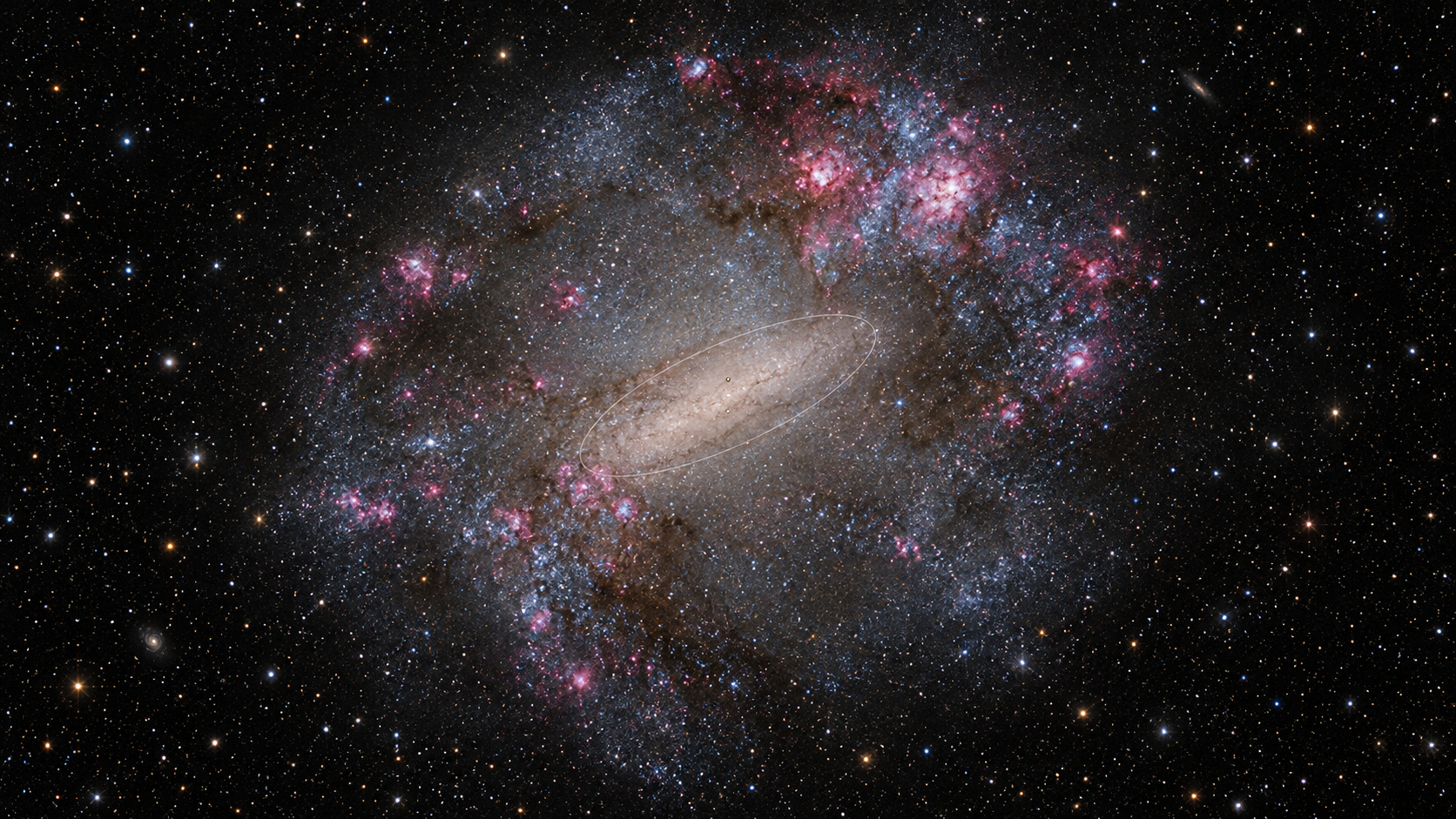
At a redshift of around 2, the Universe is already nearly three billion years old. Generations of stars have been born and died. Their supernovae have cast carbon, oxygen, nitrogen, silicon, iron, and a wealth of other elements into their surroundings. Massive galaxies already exist, and cosmic star formation activity is near its peak.
Intuition suggests, therefore, that this is a very strange place to look for the most primitive stars that nature can forge.
Yet that is precisely what a team led by Mahan Mirza Khanlari did by digging through data from the Hobby–Eberly Telescope Dark Energy Experiment, or HETDEX. In a sample of 109,545 Lyman-α emitting galaxies located between z=1.9 and z=2.3, the researchers singled out eight objects displaying a rare spectral combination: relatively strong He II λ1640 emission, yet no significant detection of several major ultraviolet metal lines, notably N V, C IV, and O III]. The paper was posted on arXiv on September 14, 2026, and accepted for publication in The Astrophysical Journal.
These are not eight confirmed Population III stars. The authors make no such claim. The eight sources are candidates whose average spectrum resembles what one would expect from an extremely metal-poor stellar population, or even a “Pop III-like” component. The current data do not even directly measure their gas-phase metallicity, and several competing mechanisms remain on the table.
Yet if even some of these objects withstand follow-up observations, their significance would extend well beyond the hunt for the “first stars.” The result would suggest that the chemical enrichment of the Universe is not a sharp chronological boundary. Pockets of near-primitive matter may have survived for billions of years amidst a cosmos already heavily polluted by preceding stellar generations.
In other words: Population III could be as much a question of place as of time.
“Population III” Does Not Simply Mean “A Very Old Star”
The name invites confusion.
Population I stars, like the Sun, are relatively rich in heavy elements. Population II stars, typical of ancient populations in the galactic halo and globular clusters, contain far fewer.
Then comes Population III.
Historically and physically, Population III stars are those that form from primordial gas, before significant enrichment by earlier stellar generations. Following primordial nucleosynthesis, the Universe was composed almost entirely of hydrogen and helium, with trace amounts of lithium. In astronomy, any element heavier than helium is termed a “metal.”
The first stars therefore had to emerge in an environment radically different from that of the Sun. Without carbon, oxygen, or dust to help the gas cool efficiently, its fragmentation and collapse followed a distinct physics. Modern models no longer restrict Pop III to the simplistic caricature of a solitary star of several hundred solar masses: fragmentation can produce small systems and a more intricate mass distribution. Nevertheless, it remains likely that their mass function was noticeably more top-heavy than that of present-day populations.
This is also what makes them spectroscopically compelling. Very hot, extremely metal-poor stars can generate extraordinarily hard ionizing radiation.
And this is where helium enters the picture.
Why the He II λ1640 Line Is So Prized
To efficiently produce the nebular He II λ1640 line, one must first possess photons energetic enough to strip the second electron from helium, meaning an energy exceeding 54.4 eV.
Ordinary, metal-enriched stellar populations generally do not produce many photons of such high energy.
Very hot, very massive, and extremely metal-poor stars, however, can. When doubly ionized helium subsequently recombines, part of its energy is radiated as spectral lines, including He II at 1640 Å in the ultraviolet.
This yields a first guideline:
abundant He II implies a source of extremely energetic photons.
Yet it does not at all imply:
abundant He II implies Population III stars.
An active galactic nucleus (AGN) can produce these photons. Fast shocks can as well. Wolf-Rayet stars, very massive stars, stripped-envelope stars, evolved binaries, or X-ray sources can likewise harden the ionizing spectrum. The origin of nebular He II observed in star-forming galaxies remains, in fact, an unresolved astrophysical puzzle.
The real question is therefore: what accompanies the He II?
The Target Signal Is as Much an Absence as a Presence
Suppose an AGN generates enough energetic radiation to heavily ionize helium.
In chemically enriched gas, the very same conditions will also excite or ionize carbon, nitrogen, and oxygen. Lines such as C IV λ1549, N V λ1240, and O III] λ1663 then serve as telltale tracers.
The same logic applies to many enriched stellar populations or fast shocks: they can account for the He II, but they struggle to simultaneously produce strong He II alongside virtually no emission from the available metals.
In genuinely metal-poor gas, the problem vanishes for an almost trivial reason: even if thermal conditions theoretically allow these transitions to occur, there are simply very few carbon, nitrogen, or oxygen atoms available to emit them.
The targeted pattern therefore becomes:
very hard ionizing spectrum + strong He II + extremely faint UV metal lines.
This is the pattern that the HETDEX team set out to find.
HETDEX Had Exactly the Right Kind of Data
HETDEX was not originally conceived as a machine for unearthing primordial stars. Its primary mission is cosmological, focusing on mapping cosmic expansion through an enormous spectroscopic survey of Lyman-α emitting galaxies.
Yet its architecture gives it a decisive advantage for this specific search.
Unlike surveys that first identify galaxies in imaging before selecting which ones to target spectroscopically, HETDEX conducts blind, untargeted spectroscopy. Its VIRUS instrument records spectra across expansive swathes of the sky without requiring an object to be pre-selected based on luminosity or morphology.
The completed survey spans nearly 87 square degrees of science data, and its public catalogue contains over one million classified sources.
For this specific effort, the 1.9 < z < 2.3 window is especially well suited: the wavelengths accessible to VIRUS allow Lyman-α, He II λ1640, and several major metal lines used to weed out false positives to be observed simultaneously.
The researchers started from a cleaned catalogue of 109,545 high-confidence Lyman-α emitters.
Then began a massive winnowing process.
An initial automated search yielded roughly 13,000 spectra with an acceptable positive fit around the expected position of He II. These were ranked by signal-to-noise ratio. Roughly 500 of the highest-ranked candidates were inspected far more meticulously: spectra, individual fibers, spatial consistency, available imaging, potential foreground galaxies, AGN signatures, and the possible presence of metal lines.
In the end: eight objects.
That represents only about 7.3 × 10⁻⁵ of the initial sample.
Rare, unquestionably. Yet this figure must not be misconstrued as “one galaxy in 14,000 harbors Pop III stars.”
The selection was never designed for completeness.
The Eight Objects Are Individually Faint, and That Is Fundamental
The single most critical detail when weighing the strength of the evidence is arguably this: candidate He II detections in the individual spectra have signal-to-noise ratios between only 2.4 and 3.6.
These are therefore not eight pristine, independent spectra each displaying an unquestionable He II line followed by a suite of ultra-deep non-detections.
To accurately measure their shared properties, the researchers stacked the eight spectra to boost the signal.
This distinction must be kept in mind down to the very last line of the paper.
In this composite spectrum, the He II signal emerges clearly.
The team measured a rest-frame equivalent width of:
EW(He II) = 28.7 ± 6.7 Å.
Its average luminosity is:
L(He II) = (2.98 ± 0.38) × 10⁴² erg/s.
The ratio:
He II / Lyα = 0.354 ± 0.094.
And the approximate intrinsic line width of He II is:
FWHM = 449 ± 105 km/s.
Crucially, no significant emission from N V, C IV, or O III] appears.
The 3σ upper limits are:
N V / He II < 0.167, C IV / He II < 0.128, and O III] / He II < 0.140.
This is where these eight objects become truly perplexing.
A Methodological Detail Prevents Overinterpreting the Result
It would be tempting to describe the stacked spectrum as if the team had selected eight galaxies solely by their He II emission and subsequently discovered, to their surprise, that they contained no metal lines.
That is not quite how it happened.
The selection procedure deliberately filtered out spectra showing obvious UV metal lines or clear AGN signatures. The authors state this openly: the selection itself shapes the spectral pattern observed at the end.
There is, therefore, an unmistakable selection effect.
This does not render the result circular. Following qualitative selection, stacking allows researchers to establish exceptionally stringent quantitative limits on the C IV/He II, N V/He II, and O III]/He II ratios.
Yet it reframes the scientific question.
The result is not:
We stumbled upon eight metal-free galaxies by pure chance.
Rather, it is:
We designed a search specifically to isolate rare galaxies combining extremely hard ionizing radiation with faint UV metals, and identified eight targets whose composite spectrum drives that combination into a regime difficult to explain with ordinary contaminants.
The distinction is substantial.
Why Ordinary AGNs Fall Short
An accreting black hole is the most obvious alternative candidate.
It easily produces the photons required to ionize He+.
Yet the narrow-line regions of enriched AGNs generally produce far stronger high-ionization UV lines.
The authors contrast their limit of C IV/He II < 0.128 with typical published values of approximately 1.42 for high-redshift radio galaxies, 2.04 for type II quasars, and 2.20 for Seyfert 2 galaxies.
The disparity exceeds an order of magnitude.
A broad-line AGN encounters a second hurdle: the intrinsic He II line width in the stack, roughly 449 km/s, is far too narrow for the classical regime of an unobscured broad-line AGN.
Available radio and X-ray observations also show no luminous counterparts.
This does not rule out every possibility. A faint, heavily obscured, or intrinsically metal-poor AGN could slip under these diagnostics.
Yet at that stage, rescuing the AGN hypothesis requires making the AGN itself extraordinary.
Shocks Merely Displace the Problem Rather Than Solving It
Fast radiative shocks can likewise generate radiation energetic enough to produce He II.
Yet the complication immediately resurfaces: in a medium with ordinary metal content, they should also produce C IV, N V, or O III].
One can suppress these lines by drastically reducing the gas metallicity.
Yet the explanation then becomes:
perhaps this is not a very metal-poor stellar population; it is shocks… propagating through very metal-poor gas.
In other words, the ionizing mechanism shifts, but one of the most compelling physical conclusions the existence of a chemically primitive environment at z≈2 remains unavoidable.
Wolf-Rayet Stars: He II Width Is Not Sufficient Proof
Wolf-Rayet stars represent another natural source of He II.
A conventional, metal-enriched Wolf-Rayet population introduces two difficulties, however. Its stellar winds usually produce much broader He II features, on the order of 1,000 km/s, and its environment should display prominent metal signatures.
Yet an intriguing caveat arises: models of very massive stars at low metallicity can produce slower, dense winds that yield He II widths around 300 to 500 km/s.
That is virtually identical to the width observed by HETDEX.
A FWHM of 449 km/s is therefore not enough on its own to dismiss a low-metallicity very massive star population.
Once again, the decisive leverage comes from the metal lines.
The authors note that populations retaining even a few percent of solar abundance should produce more C IV, N V, or O III] than observed. An extremely metal-poor very massive star population remains possible but at that point it converges squarely on the “Pop III-like” regime.
Even the He II/Lyα Ratio Conceals a Trap
At He II/Lyα ≈ 0.35, the ratio is remarkably elevated.
This would initially seem to bolster the case for an extraordinarily hard ionizing spectrum.
Photoionization models examined by the authors, however, tell a more nuanced story. The model that best reproduces the He II equivalent width among those tested remains roughly 5.4 times too low in He II/Lyα.
This does not automatically imply that the model fails.
Unlike He II, Lyman-α is a resonant line. Lyα photons can undergo repeated scattering by neutral hydrogen before escaping, altering direction and becoming far more susceptible to dust absorption. Geometry and radiative transfer can therefore drastically attenuate observed Lyα without altering He II in equal measure.
In an extreme scenario where the entire discrepancy stemmed from Lyα, the authors estimate that emergent Lyα emission would need to be reduced by roughly 80% relative to the model in question.
The He II/Lyα ratio is intriguing, but it cannot be treated as a straightforward thermometer for the stellar population.
The Real Paradox: How Could Primordial Gas Survive So Long?
The first generation of stars likely began emerging at redshifts around 20 to 30, when the Universe was barely a hundred million years old. By z≈10, it was less than half a billion years old.
At z≈2, roughly three billion years have elapsed.
Why would all gas not have been contaminated in the intervening time?
Because chemical enrichment is not instantaneous.
When a supernova synthesizes and ejects oxygen, carbon, or iron, those elements are not broadcast uniformly throughout the Universe. They must be propelled by winds, explosions, turbulent motions, galactic interactions, and cosmic accretion.
Then they must physically mix into the gas that will form subsequent stellar generations.
Both phases transport followed by microscopic mixing require time and unfold unevenly.
A region can therefore sit inside a halo or in the vicinity of an enriched galaxy without every parcel of gas sharing that same chemical composition.
This distinction is fundamental: the average metallicity of a galaxy does not guarantee the metallicity of every gas pocket feeding it.
The Concept of Late Population III Has Long Existed
While the HETDEX result appears striking, its underlying premise was not invented in 2026.
As early as 2007, simulations by Luca Tornatore, Andrea Ferrara, and Raffaella Schneider concluded that inefficient metal transport and large metallicity fluctuations allowed Pop III star formation to persist down to z≈2.5 in their model. These late episodes shifted preferentially toward the outskirts of already collapsed structures.
Subsequent studies continued to demonstrate highly inhomogeneous chemical distributions. Simulations of galaxies during reionization notably identify pockets of Pop III formation in environments already hosting enriched populations, sometimes at their fringes, sometimes within nearly pristine gas clouds.
This distinction resolves an apparent contradiction.
The first Population III stars belong indisputably to the infant Universe.
Yet a star formed much later from a reservoir that remained chemically pristine could, from the standpoint of its initial composition, also be classified as Population III.
It would not, of course, be among the first stars chronologically.
This is precisely why the label “Pop III-like” is so apt in the HETDEX study: it avoids conflating an ultra-metal-poor physical signature with a genealogical heritage that remains to be proven.
Spectacular Candidates Have Misled Us Before
The saga of CR7 should counsel caution.
This galaxy at z=6.6 attracted intense interest following observations of strong Lyman-α and apparently intense He II emission without evident metal lines. A dramatic Pop III population was suggested.
Subsequent observations and reanalyses revised the narrative: hints of strong [O III] emission emerged, and the estimated strength of He II was lowered. More mundane explanations notably a low-mass AGN or a young, metal-poor stellar population proved viable.
This precedent serves as a textbook reminder of why “He II + no detected metals” must always carry an asterisk.
Conversely, JWST is beginning to push diagnostics substantially further. Around GN-z11 at z=10.6, He II emission unaccompanied by metal lines was recently corroborated with high-resolution NIRSpec-IFU spectroscopy. Even in that case, far closer to the expected era of Population III, the authors keep alternative scenarios on the table, such as direct collapse black holes or primordial black holes.
Other extremely metal-poor systems have been identified at z≈6–7, and an especially compelling candidate, MPG-CR3, was found at z=3.19 with very low metallicity limits.
HETDEX extends this line of inquiry down to z≈2 not with an individually targeted object, but through a statistical search across more than one hundred thousand Lyα emitters.
That is likely the most distinctive contribution of the paper.
Eight Candidates Do Not Mean Eight Identical Objects
Stacking represents both the strength and weakness of the analysis.
It clearly uncovers an average property that was difficult to discern in each noisy spectrum.
Yet a stack can mask a heterogeneous population.
Nothing requires all eight sources to share the same physical origin. Several might be genuine ultra-metal-poor stellar systems, another might host an unusual AGN, and another could be affected by a spectral interloper or a gravitational cooling mechanism.
Lyα kinematics confirm that the sample is not entirely uniform: three objects show significantly positive velocity offsets between Lyα and He II, three display negative offsets, and two are consistent with zero. The overall stack is itself consistent with zero offset.
There is, as yet, no single kinematic mechanism that accounts for all eight.
This is why the next tier of proof must proceed object by object.
Another Challenge: The He II Is Almost Too Luminous
If the Pop III-like interpretation holds, one must still account for how so many photons are produced.
The average He II luminosity in the stack, nearly 3 × 10⁴² erg/s, lies toward the luminous end of Pop III models evaluated in the study.
Simulations by Venditti and collaborators used for comparison can reach approximately 5 to 6 × 10⁴² erg/s, but only in scenarios featuring a heavily top-heavy initial mass function and Pop III populations totaling roughly 6 × 10⁵ solar masses.
This is hardly a modest cluster of primordial stars in an unremarkable halo.
If the signal is indeed stellar and near-primordial, it may require a uniquely favorable environment: substantial Pop III stellar mass, a sharply top-heavy mass function, specialized stellar evolution, an unusual halo, or multiple unresolved regions captured within the HETDEX fiber aperture.
The exotic interpretation does not resolve every challenge effortlessly. It creates new, testable ones.
The Figure of “30 per Gpc³” Is Far Less Robust Than It Appears
Based on the eight candidates and the normalization of HETDEX’s Lyα luminosity function, the authors derive an approximate comoving number density of:
≈30 candidates per Gpc³.
It is tempting to translate this immediately into the cosmic abundance of late Population III stars.
That would be misguided.
The search was deliberately filtered toward the cleanest objects: relatively strong He II, an absence of obvious metal lines, and Lyα selection. It may therefore overlook Pop III episodes embedded within enriched galaxies, lightly self-enriched systems, objects with weaker He II, stars intermingled with Pop II populations, or sources simply absent from the LAE catalogue.
Conversely, some of the eight candidates may yet prove to be astrophysical or observational false positives.
These two corrections pull in opposite directions, and neither is yet adequately quantified.
The authors therefore present ≈30 Gpc⁻³ as a rough first-order normalization for this selected class, rather than a measurement of the true incidence of Pop III stars at z≈2.
What Confirming These Objects Would Actually Change
Finding near-primordial stars at z≈2 would not imply that our picture of the early Universe collapses.
The reality would be more subtle and considerably more interesting.
The broad chronology would remain intact: the vast majority of Pop III formation takes place at high redshifts, before Pop II and more enriched populations come to dominate cosmic star formation.
What these eight objects test is the efficiency of chemical mixing.
Confirmation would provide experimental proof that billions of years after stellar enrichment began, reservoirs of gas can still escape heavy element contamination almost entirely.
Feedback models would then have to reconcile two realities at once:
galaxies capable of expelling enormous quantities of metals into their circumgalactic and intergalactic surroundings, and small regions sufficiently isolated or freshly accreted to remain nearly pristine.
The guiding question would thus shift from:
“When did the first stars vanish?”
to a more physical inquiry:
“How rapidly did the Universe actually manage to mix itself?”
That is a profound distinction.
Three Steps Still Separate These Candidates From a Decisive Demonstration
The authors themselves outline the required observational sequence.
The first step is deeper rest-frame UV spectroscopy. At z≈2, these wavelengths are accessible from ground-based optical facilities. Researchers must confirm He II at far higher significance in each of the eight objects, rule out artifacts, and push individual detection limits on N V, C IV, and O III] much lower.
Next comes rest-frame optical spectroscopy, which falls into the near-infrared at these redshifts. Observations of Hβ, [O III] λ4959/5007, [O II] λ3727, and Hα will finally allow astronomers to directly constrain gas metallicity, ionization parameters, dust extinction, and AGN diagnostics.
This point is critical: HETDEX currently demonstrates that UV metal lines are faint. It does not directly measure an oxygen abundance low enough to definitively declare the gas primordial.
Finally, objects that pass both screening hurdles will be prime targets for JWST/NIRSpec, capable of securing the high signal-to-noise spectra needed to distinguish near-metal-free stellar populations from resilient competing scenarios.
Many of the eight candidates may fall away during this process.
That would not constitute failure.
The scientifically decisive question is whether even a single one of them ultimately demonstrates intrinsically powerful He II, extraordinarily low metallicity, and the credible absence of an AGN or alternative ionizing source.
Because at z≈2, even one verified case would reveal something extraordinary about the Universe: nearly three billion years after the Big Bang, long after successive generations of stars had flooded the cosmos with heavy elements, chemical pollution had still left behind a few untouched sanctuaries.
The very first stars belong to the distant past. The conditions capable of bringing them into being may have endured far longer.