Internet is already changing its locks to resist quantum computers
Quantum computers capable of breaking our cryptography don't exist yet. Yet, part of the Web is already preparing for their arrival. And this isn't science fiction.
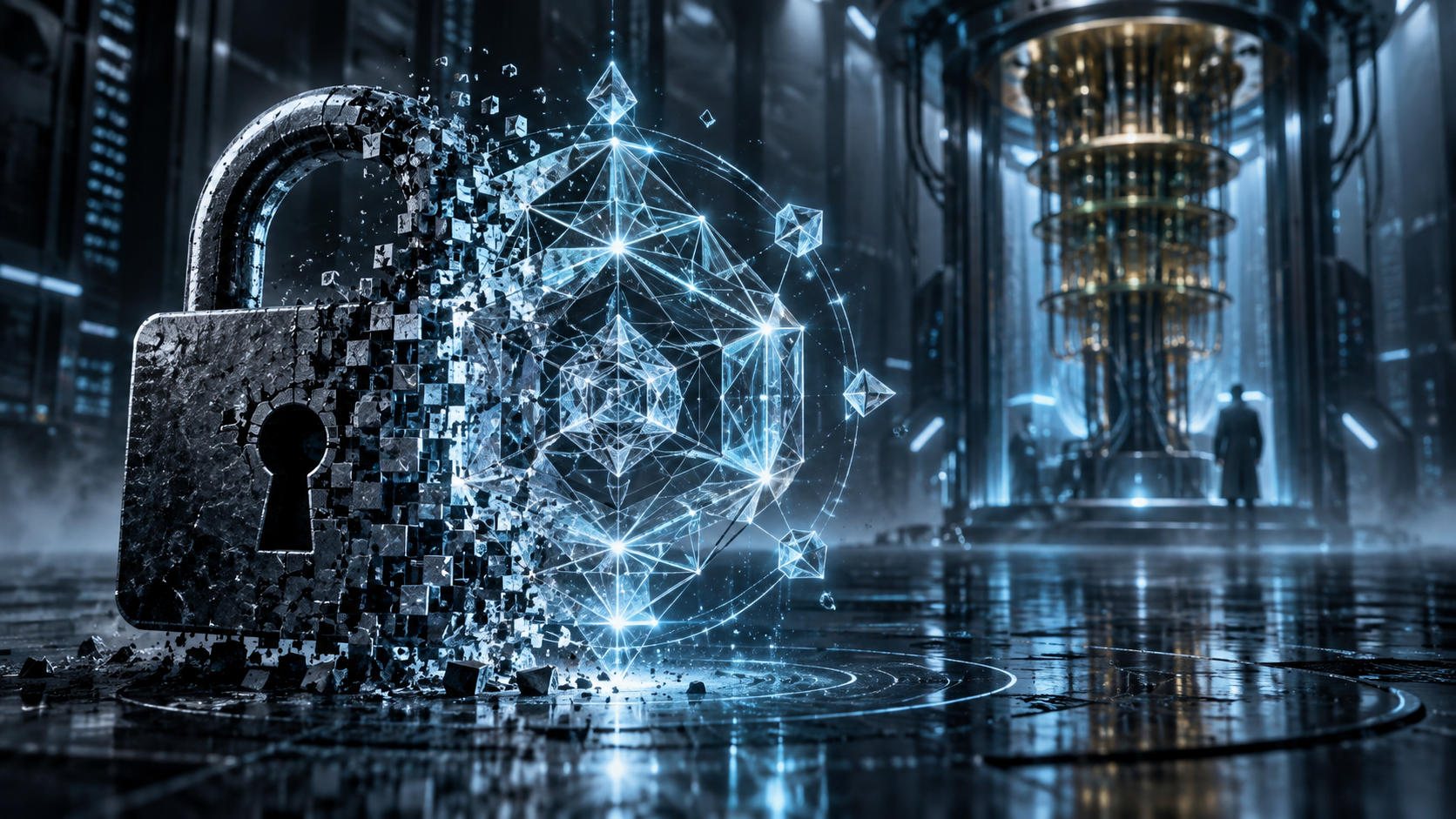
Part of the Internet is replacing its locks before the thief capable of opening them even exists.
Today, when you connect to a site via HTTPS, make a payment, or exchange sensitive data, part of the security rests on mathematical problems extremely difficult to solve with our classical computers.
The problem is that a sufficiently powerful quantum computer wouldn’t play by the same rules.
The danger isn’t the 2026 quantum computer
Current quantum machines are a long way from being able to simply “break the Internet.” To break systems like RSA or certain elliptic-curve cryptographies at scale would require fault-tolerant quantum computers far more powerful than those available today.
But waiting for them to exist would be a very bad strategy.
Encrypted data can be intercepted today, stored for years, then decrypted later if the technology becomes sufficiently powerful. This is often called harvest now, decrypt later.
In other words: a secret stolen in 2026 can still hold value in 2036.
Post-quantum cryptography already exists
The U.S. NIST standardized in 2024 several algorithms designed to resist both classical computers and future quantum computers, notably ML-KEM for key establishment and ML-DSA for digital signatures. In 2026, the agency now considers that migration must begin.
And this transition is starting to reach the real Web.
Chrome is working, for example, on a roadmap to make HTTPS authentication resistant to quantum attacks. Google is also experimenting with a new certificate architecture called Merkle Tree Certificates, notably with Cloudflare, to prevent post-quantum protections from making connections significantly heavier.
The most fascinating thing isn’t, therefore, that a quantum computer could one day threaten the Internet.
It’s that the defense against this hypothetical machine is already being deployed.
And if the transition succeeds properly, the day genuinely dangerous quantum computers appear, the majority of users may not notice absolutely anything.